
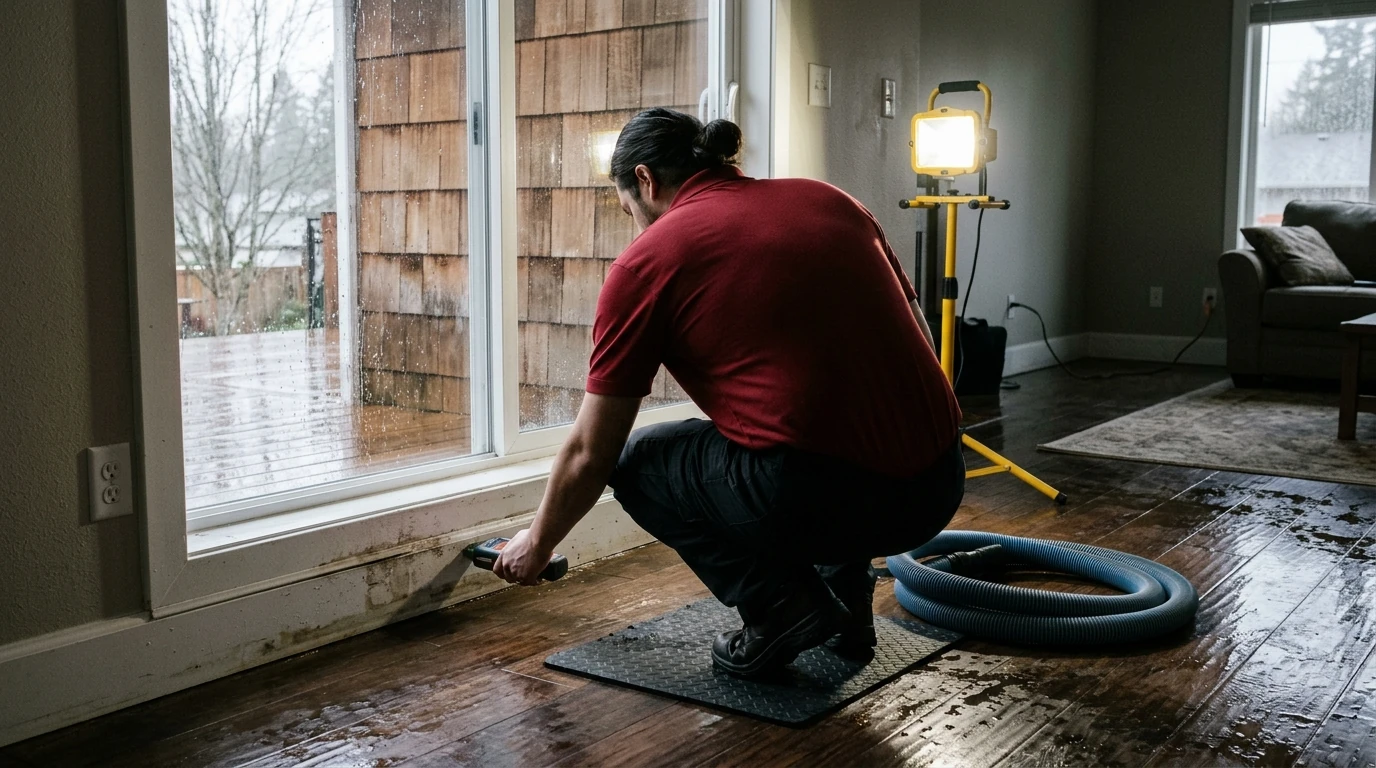
TL;DR: If your house just flooded in Federal Way, stop the water source first (shut the main valve or sump breaker), then call a licensed water damage restoration company before you call your insurer. The restoration crew documents the damage, starts extraction and drying, and can help file the claim correctly. Most standard homeowners policies cover sudden water events like a burst pipe, but not flooding from rising groundwater or stormwater without a separate flood policy.
If you’re standing in a wet living room in Twin Lakes or watching water creep across a daylight basement near Dash Point right now, you don’t need a lecture on water categories. You need to know what to do in the next ten minutes and who picks up the phone after that. Federal Way’s older ramblers and the waterfront homes near Dash Point State Park weren’t built with today’s rainfall totals in mind, and when they flood, the clock on mold growth starts within 24 to 48 hours.
What should you do in the first 30 minutes after your house floods?
Stop the water at its source, then get people and pets away from standing water, especially if it’s near outlets or appliances. If a supply line or appliance hose is the cause, shut off the water at the fixture or the home’s main valve. If a sump pump failed or water is rising from outside, cut power to the affected area at the breaker if you can do it safely without stepping in water.
Next, move what you can off the floor: furniture legs onto foil or blocks, electronics up high, rugs out of standing water. Take photos and a short video walkthrough before anything is moved further, since this documentation matters for your insurance claim later. Don’t run a shop vac on anything beyond an inch or two of clean water, and don’t wade into water if you smell sewage or see it backing up from a drain, that’s a different hazard entirely.
Who do you call first, a plumber, your insurer, or a restoration company?
Call a water damage restoration company before you call your insurance company, especially if the water is still spreading or it’s after hours. A restoration crew stops ongoing damage immediately and creates the documented timeline your claim actually needs, whereas calling the insurer first just starts a hold queue while your subfloor keeps absorbing water.
If the water is actively flowing from a visible break, a plumber is the right first call to physically stop the leak. But most Federal Way restoration companies, including National Restoration Construction, can also shut off a failed supply line or appliance connection on arrival and handle extraction the same visit, which saves a second truck roll. Once mitigation has started, call your insurance company to open the claim. Your agent will want the date and cause of loss, which the restoration crew’s intake paperwork already captures.
If the flooding involves sewage backing up through a floor drain or toilet, that’s Category 3, black water, under the ANSI/IICRC S500 standard. Don’t attempt that cleanup yourself. It carries real health risk and needs antimicrobial treatment and PPE a homeowner shouldn’t be handling without training.
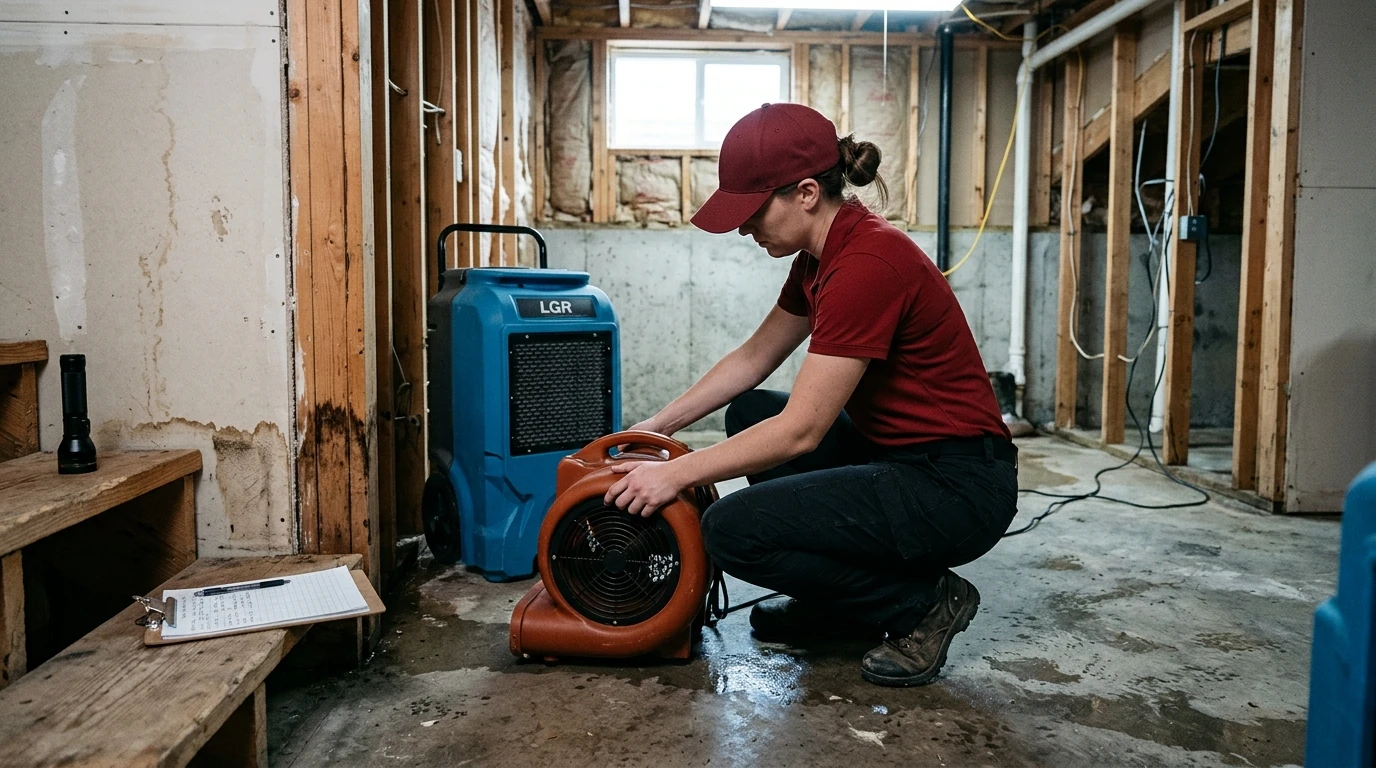
What does a restoration crew actually do when they show up?
A restoration technician’s first job is assessment: identifying the water category, measuring moisture in walls and flooring with a meter, and mapping how far the water traveled behind baseboards and under cabinets. That assessment determines what gets dried in place and what gets removed.
From there, the process generally follows a few steps:
- Extraction - pulling standing water with truck-mounted or portable extractors.
- Removal of unsalvageable materials - wet carpet pad, saturated drywall below the waterline, and insulation that can’t be dried are typically cut out, especially in Category 2 or 3 losses.
- Drying - air movers and LGR dehumidifiers are set to pull remaining moisture from structural materials, usually monitored daily with meters until readings return to normal.
- Antimicrobial treatment - applied when contamination level warrants it.
- Documentation - photos, moisture logs, and a written scope of work, which becomes the basis for both the repair plan and the insurance claim.
Drying time depends heavily on the class of loss and how much the house absorbed before anyone arrived; our post on how long water damage restoration actually takes breaks that timeline down in more detail.
Will your homeowners insurance cover this?
Most standard homeowners policies cover sudden, accidental water damage, like a burst pipe or a washing machine hose that suddenly fails, but they generally exclude flooding from outside water sources. If the water came from rising groundwater, a creek overflow, or stormwater pooling against your foundation, that’s typically a flood event requiring separate flood insurance through the National Flood Insurance Program or a private flood policy, not your standard homeowners coverage.
Sump pump failure and sewer backup are also usually excluded unless you’ve added a water backup endorsement specifically. Check your declarations page for that line item before assuming you’re covered. The Insurance Information Institute has a solid plain-language breakdown of what’s typically in and out of a standard policy. For a Federal Way-specific walkthrough of what usually gets paid out, see our guide on whether homeowners insurance covers water damage.
Whichever way your claim shakes out, document everything before cleanup starts and keep every receipt. Prompt mitigation isn’t optional either, most policies require you to limit further damage once you discover the loss, and delaying can genuinely weaken a claim.
A flooded house in Federal Way isn’t a problem that gets better by waiting until morning. The sooner water stops moving and drying equipment starts running, the less you lose to framing damage, warped flooring, and the mold that follows standing water within a day or two.
About National Restoration Construction
NARESTCO is an IICRC-certified, EPA-certified restoration and general contracting company serving Federal Way, WA since 2004, holding a General Contractor Certificate of Registration (license NATIORC792M6) through the Washington State Department of Labor & Industries. Their crews handle water damage restoration, flood cleanup, basement flooding, burst pipe response, and the reconstruction that follows, across South King County and the greater Puget Sound region, operating 24/7 for active water emergencies.
Need help now? Call National Restoration Construction at (206) 883-0333.
Video Transcript
Your house just flooded in Federal Way, and you need answers fast, not a lecture on water categories. First, stop the water source immediately. Shut off the main valve, or cut power to the breaker if it’s safe to do so. Move furniture off the floor, and snap photos or video before anything moves again. This documentation helps support your insurance claim later. Call a licensed water damage restoration company before you call your insurer, especially if water is still spreading or it happens after hours. A plumber can stop an active leak, but most restoration crews also shut off supply lines and start extraction during the same visit. Your contractor measures moisture inside walls and floors, carefully mapping exactly how far the water traveled behind baseboards and under cabinets. Extraction comes first, then removal of unsalvageable materials, followed by air movers and dehumidifiers drying everything that’s still structurally sound. If sewage is backing up through a drain or toilet, that’s considered black water. Don’t attempt that cleanup yourself, call a trained professional. Standard homeowners policies often cover a sudden burst pipe, but they usually exclude flooding caused by rising groundwater without a separate flood policy. Don’t wait for mold to take hold. Call National Restoration Construction at (206) 883-0333 to schedule an assessment today.